

Web Developer, SEO & Digital Marketing Expert

A practical SEO roadmap to help ecommerce stores rank and convert better.
Web Development
Digital Marketing
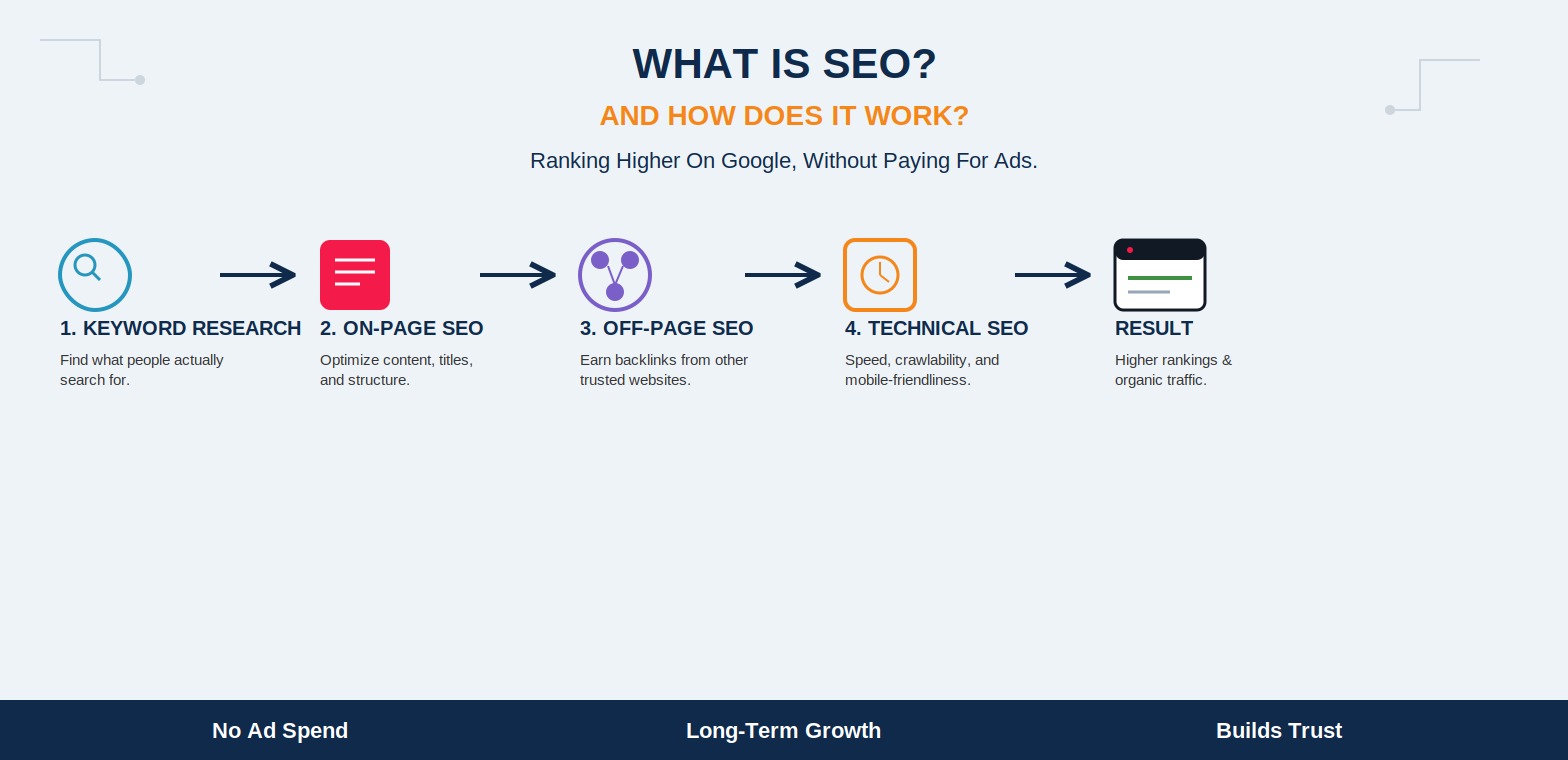
SEO (Search Engine Optimization) is the practice of improving a website so it ranks higher in search engine results for relevant queries, driving organic (unpaid) traffic. When someone searches for something on Google, the search engine scans billions of pages and ranks them based on relevance and quality signals. SEO is the work of aligning your website with those signals — through content, structure, and technical health — so search engines understand what your pages are about and trust them enough to rank them well.
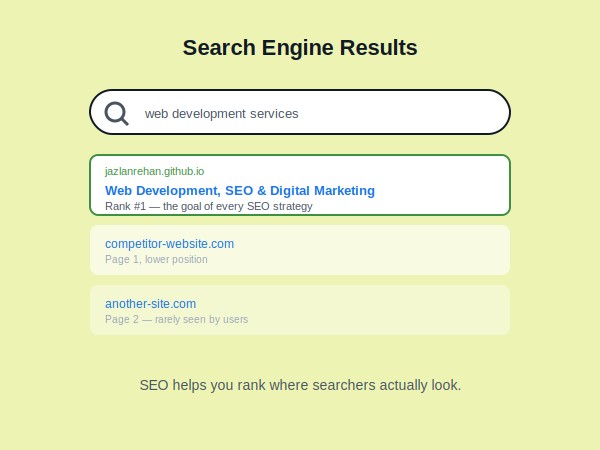
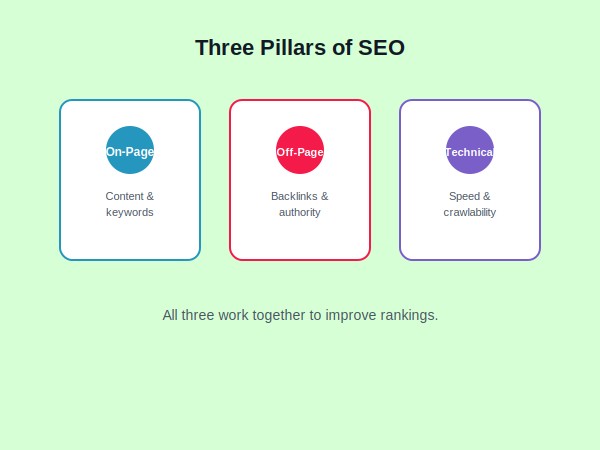
SEO breaks down into three main areas. On-page SEO covers everything on the page itself: keyword-targeted content, optimized title tags and meta descriptions, proper heading structure, and internal linking. Off-page SEO focuses on signals from outside your site, primarily backlinks from other reputable websites, which act as votes of confidence in your content's value. Technical SEO ensures search engines can actually crawl and index your site efficiently — covering page speed, mobile-friendliness, secure connections (HTTPS), clean URL structures, and proper use of sitemaps and robots.txt.
How does it actually work in practice? Search engines use automated crawlers (bots) to discover and read pages across the web, storing that information in a massive index. When someone searches, an algorithm evaluates the index against hundreds of ranking factors — keyword relevance, content quality, site authority, user experience signals, and more — to decide which pages to show and in what order. SEO doesn't produce instant results; rankings typically improve gradually over weeks and months as search engines re-crawl and re-evaluate your site. But unlike paid ads, the traffic SEO brings keeps flowing without ongoing ad spend, making it one of the most valuable long-term investments for any website.

Clear explanation of crawlers and indexing — never fully understood how Google actually 'sees' websites until now.

Good point about SEO being gradual vs instant. Set the right expectations for anyone starting out.