



Web Developer, SEO & Digital Marketing Expert
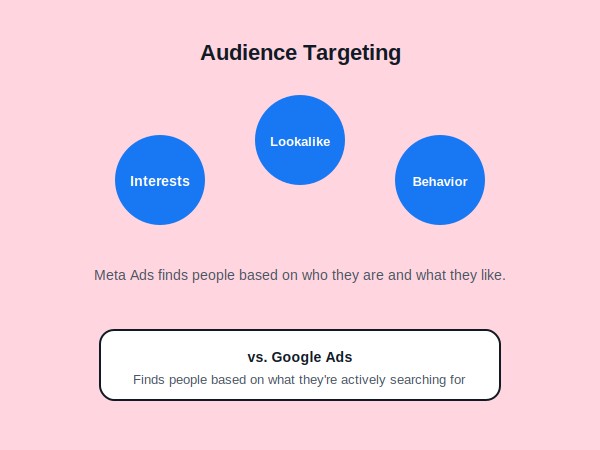
Two platforms, two strategies. Here's how to decide which ad platform fits your goal.
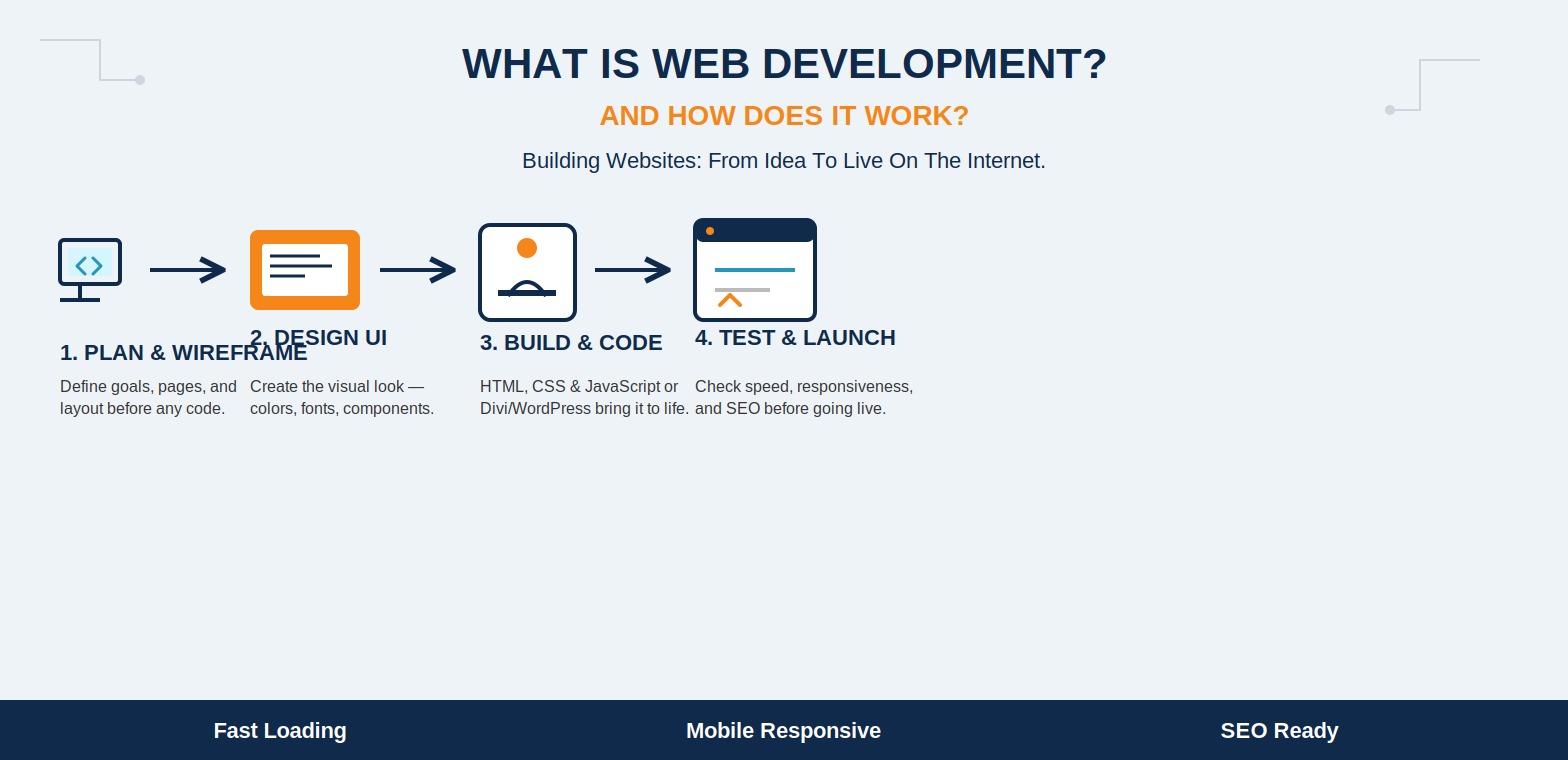
Web development is the process of building and maintaining websites — everything from a simple one-page site to a complex web application. It covers planning, designing the layout, writing the code, and testing the final result before it goes live. Beyond just "making a website," web development is a complete process that turns a business idea into a fast, functional, and search-engine-friendly online presence. When you start a web development project, the first step is always planning: defining the site's purpose, target audience, and the pages it needs.
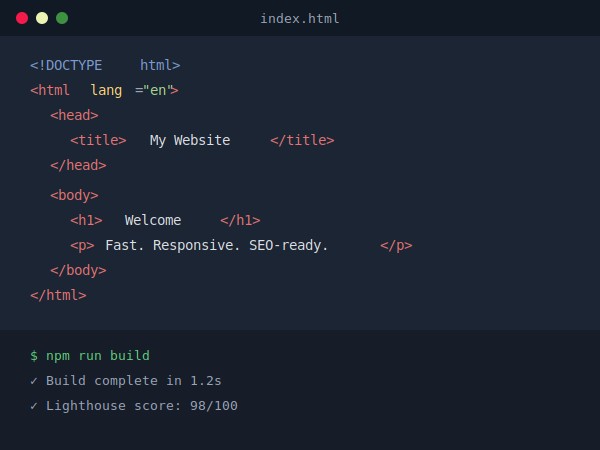
Once the plan is set, development typically splits into two parts: front-end and back-end. Front-end development is everything the visitor sees and interacts with — built using HTML for structure, CSS for styling, and JavaScript for interactivity. Back-end development, when needed, handles the server, database, and application logic behind the scenes. For many small business and portfolio sites, a well-built front-end using clean HTML/CSS/JS or a flexible builder like Divi/WordPress is enough to deliver a fast, professional result.
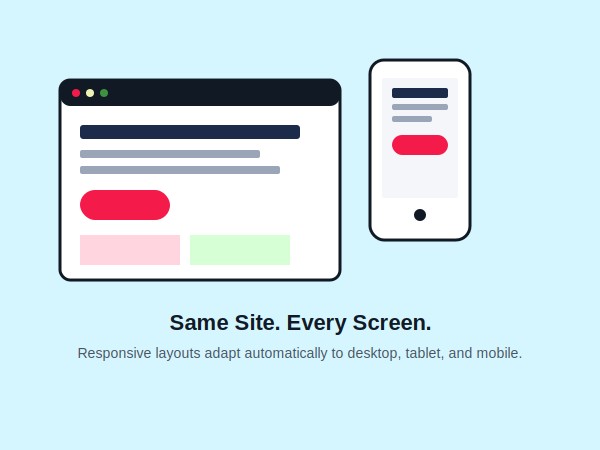
Throughout development, performance and SEO are built in from the start, not added as an afterthought. This means writing semantic HTML, optimizing images, minimizing unnecessary code, and ensuring the site is fully responsive across devices. Once built, the site goes through testing across browsers and screen sizes before launch. Good web development doesn't end at launch either — ongoing updates, security patches, and performance monitoring keep a website running smoothly long after it goes live.

This explained the front-end vs back-end difference really clearly. Helped me understand what I actually need for my small business site.

Great breakdown of the whole process from planning to launch. Didn't realize how much goes into SEO during development itself.